
The Fourth of July: More Than Fireworks—Celebrating the Birth of a Nation
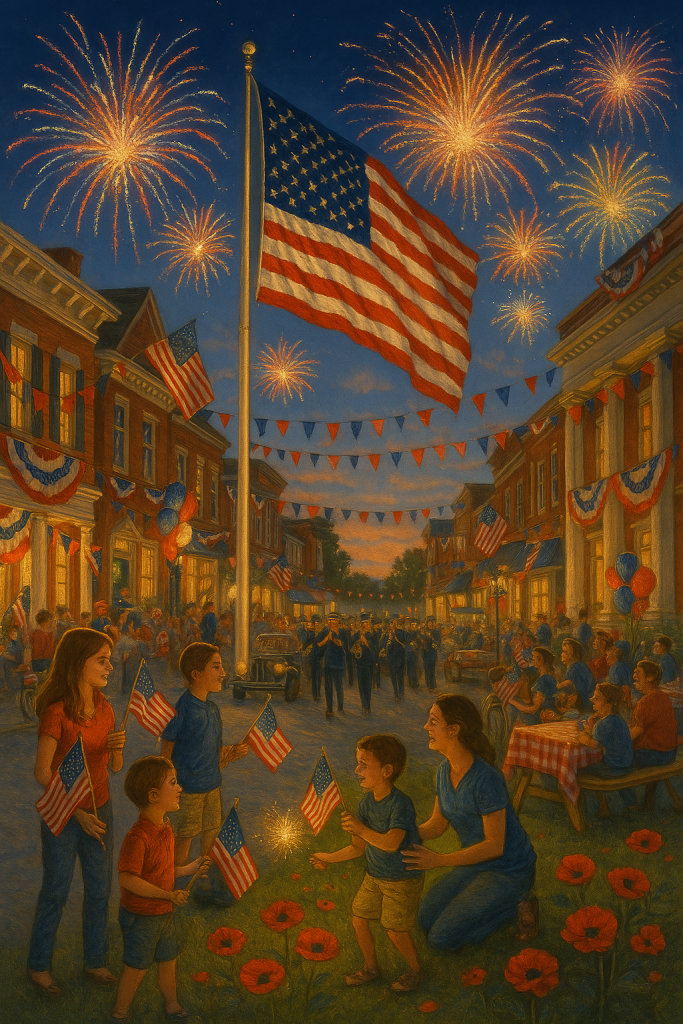
Every summer, as the calendar turns to July 4th, America erupts in a spectacular display of red, white, and blue. Fireworks light up the night sky, parades march through small towns and big cities alike, and families gather for barbecues that stretch late into the evening. But beneath the festivities and celebration lies one of the most significant moments in human history—the day America declared its independence and set in motion a revolution that would change the world forever.
The Revolutionary Moment
On July 4, 1776, the Second Continental Congress approved the final wording of the Declaration of Independence, officially breaking the thirteen American colonies’ ties with Great Britain. But this wasn’t simply a political divorce—it was a bold proclamation of revolutionary ideals that had never before been attempted on such a scale.
The document, primarily authored by Thomas Jefferson, didn’t just announce America’s separation from British rule. It articulated a radical new philosophy of government and human rights that would echo through the centuries: “We hold these truths to be self-evident, that all men are created equal, that they are endowed by their Creator with certain unalienable Rights, that among these are Life, Liberty and the pursuit of Happiness.”
These weren’t just lofty words on parchment—they were fighting words. The fifty-six men who signed the Declaration knew they were committing treason against the British Crown, an offense punishable by death. Benjamin Franklin captured the gravity of the moment when he reportedly said, “We must all hang together, or most assuredly we shall all hang separately.”
The Ideas That Changed Everything
What made July 4th, 1776, so revolutionary wasn’t just America’s break from Britain—it was the ideas that justified that break. For the first time in history, a nation was founded on the principle that government derives its power from the consent of the governed, not from divine right or hereditary privilege.
The Declaration established several groundbreaking concepts that were radical for their time and remain powerful today:
Popular Sovereignty: The idea that political power comes from the people, not from kings or nobles. This principle laid the foundation for American democracy and inspired democratic movements worldwide.
Natural Rights: The belief that certain rights are inherent to all human beings—not granted by government, but recognized and protected by it. This concept would later influence the Bill of Rights and civil rights movements throughout American history.
Right of Revolution: Perhaps most boldly, the Declaration asserted that when government fails to protect people’s rights, the people have the right to alter or abolish that government. This wasn’t just theory—America was putting it into practice.
Equality Before the Law: While imperfectly applied in 1776, the principle that all people are created equal would become the moral foundation for expanding rights and freedoms throughout American history.
The Long Road to Freedom
The signing of the Declaration was just the beginning, not the end, of America’s struggle for independence. The Revolutionary War would rage for seven more years, testing whether this new nation conceived in liberty could survive its birth. From the frozen ground of Valley Forge to the decisive victory at Yorktown, Americans fought and died to make the promises of July 4th a reality.
But even after military victory, the work of building a nation based on the Declaration’s principles proved challenging. The Articles of Confederation failed, leading to the Constitutional Convention of 1787. The new Constitution, while creating a stronger federal government, still required the Bill of Rights to guarantee the individual liberties the Revolution had promised.
Throughout American history, each generation has faced the challenge of making the Declaration’s promises real for all Americans. The abolition of slavery, women’s suffrage, the civil rights movement, and ongoing struggles for equality all trace their moral authority back to those words written in Philadelphia: “all men are created equal.”
A Living Document for a Growing Nation
What makes the Fourth of July remarkable isn’t just what happened in 1776, but how those ideas have continued to shape America and inspire the world. The Declaration of Independence became a template for liberation movements across the globe. From Latin American independence movements in the 1800s to anti-colonial struggles in Africa and Asia, oppressed peoples have looked to America’s founding document for inspiration.
At home, every major expansion of American freedom has drawn on the Declaration’s principles. Abraham Lincoln invoked it during the Civil War, arguing that a nation conceived in liberty and dedicated to the proposition that all men are created equal could not survive half slave and half free. Martin Luther King Jr. stood on the steps of the Lincoln Memorial and called America to live up to the promissory note written by the founders, demanding that the nation make good on its promise of equality for all.
Even today, the Declaration continues to challenge us. Its ideals remain a work in progress, calling each generation to expand liberty, ensure equality, and perfect the union that began with those revolutionary words.
The Spirit of Independence
Beyond its historical significance, the Fourth of July represents something essential about the American character—the spirit of independence that refuses to accept that things must remain as they are simply because that’s how they’ve always been. This spirit drove colonial farmers to take on the world’s most powerful empire. It motivated pioneers to cross an untamed continent. It inspired inventors, entrepreneurs, and dreamers to push the boundaries of what was possible.
This independence isn’t just political—it’s personal and cultural. It’s the belief that individuals can chart their own course, that hard work and determination can overcome circumstances of birth, and that tomorrow can be better than today. The Fourth of July celebrates not just America’s independence from Britain, but the ongoing American commitment to independence from the limitations that others might try to impose.
Celebrating Our Shared Heritage
When we gather each Fourth of July—whether watching fireworks burst overhead, singing the national anthem at a baseball game, or simply reflecting on what it means to be American—we’re participating in a tradition that connects us to every generation that came before. We’re celebrating the courage of the founders who pledged their lives, fortunes, and sacred honor to the cause of liberty. We’re honoring the soldiers who fought at Lexington and Concord, the statesmen who crafted the Constitution, and all those who have worked to expand the blessings of liberty to all Americans.
But we’re also celebrating something more immediate and personal—our own connection to those revolutionary ideals. Every time we vote, speak our minds freely, worship according to our conscience, or pursue our dreams without asking permission from any earthly authority, we’re living proof that July 4th, 1776, wasn’t just a historical event—it was the beginning of an ongoing American experiment in freedom.
The Continuing Revolution
As we celebrate this Fourth of July, it’s worth remembering that the American Revolution didn’t end in 1776 or even in 1783 when the war concluded. It’s an ongoing revolution—one that asks each generation to recommit to the principles of the Declaration and to work toward making its promises real for all Americans.
The fireworks that light up our skies each July represent more than just celebration—they echo the “rockets’ red glare” that proved our flag was still there after the battle. They remind us that freedom requires vigilance, that democracy demands participation, and that the blessings of liberty must be preserved and extended by each generation.
So as you celebrate this Independence Day, take a moment between the barbecue and the fireworks to remember what we’re really celebrating. We’re not just marking the anniversary of a historical event—we’re renewing our commitment to the revolutionary idea that government should serve the people, that all individuals deserve equal treatment under the law, and that liberty and justice should be available to all.
The Fourth of July isn’t just America’s birthday—it’s a reminder that the American experiment in freedom continues, and that each of us has a role to play in ensuring that the light of liberty continues to shine for generations to come.