
Labor Day stands as one of America’s most significant federal holidays, serving as both a celebration of workers’ contributions and a testament to the power of collective action in shaping the nation’s character. Established in 1894 following the tumultuous Pullman Strike, the holiday emerged during a period when industrial workers faced dangerous conditions, exhausting hours, and minimal legal protections. The strike itself had paralyzed railroad traffic nationwide and resulted in violent clashes between federal troops and workers, highlighting the deep tensions between labor and capital that threatened to fracture American society.
The historical origins of Labor Day trace back to the grassroots organizing efforts of unions in the 1880s, particularly the work of leaders like Peter McGuire and Matthew Maguire, who envisioned a day that would honor working people while advancing their cause. The first Labor Day celebrations featured massive parades where workers from different trades marched together, demonstrating solidarity across occupational lines. These early observances weren’t merely ceremonial but served as platforms for advocating concrete reforms like the eight-hour workday, safer working conditions, and fair wages. The holiday thus represented a uniquely American approach to labor relations, channeling worker grievances into civic participation rather than revolutionary upheaval.
Unions played a central role in both creating Labor Day and embodying its underlying principles of collective organization and mutual support. Through unions, individual workers gained the power to negotiate with powerful industrialists and corporations, transforming isolated grievances into coordinated campaigns for systemic change. The union movement’s emphasis on solidarity across ethnic, racial, and regional divides helped forge a broader sense of common purpose among diverse working populations. While union membership has fluctuated throughout American history, the fundamental principle that workers share common interests and can achieve more together than apart remains embedded in Labor Day’s meaning.
The holiday’s deeper significance extends beyond labor relations to encompass broader themes of national unity and democratic participation. Labor Day emerged during an era when rapid industrialization and massive immigration were transforming American society, creating new forms of inequality and social tension. By establishing a national holiday honoring workers, the country affirmed that ordinary working people were essential to the American project and deserving of recognition and respect. This acknowledgment helped bridge potential divides between different classes and communities, reinforcing the democratic ideal that all citizens, regardless of their occupation or background, contribute to the nation’s prosperity and deserve a voice in its governance.
Today, Labor Day continues to serve as an important reminder of the values that bind Americans together across political and economic differences. The holiday celebrates not just individual achievement but collective contribution, recognizing that the nation’s strength derives from millions of people working together toward common goals. In an era of increasing polarization and economic inequality, Labor Day’s message of solidarity and mutual respect offers a framework for addressing contemporary challenges. The holiday reminds Americans that despite their differences, they share fundamental interests in fair treatment, economic opportunity, and the dignity of work. By honoring both individual effort and collective cooperation, Labor Day embodies the balance between personal ambition and social responsibility that has long characterized American democracy, suggesting that true national strength emerges not from division but from the recognition that all Americans have a stake in each other’s success.
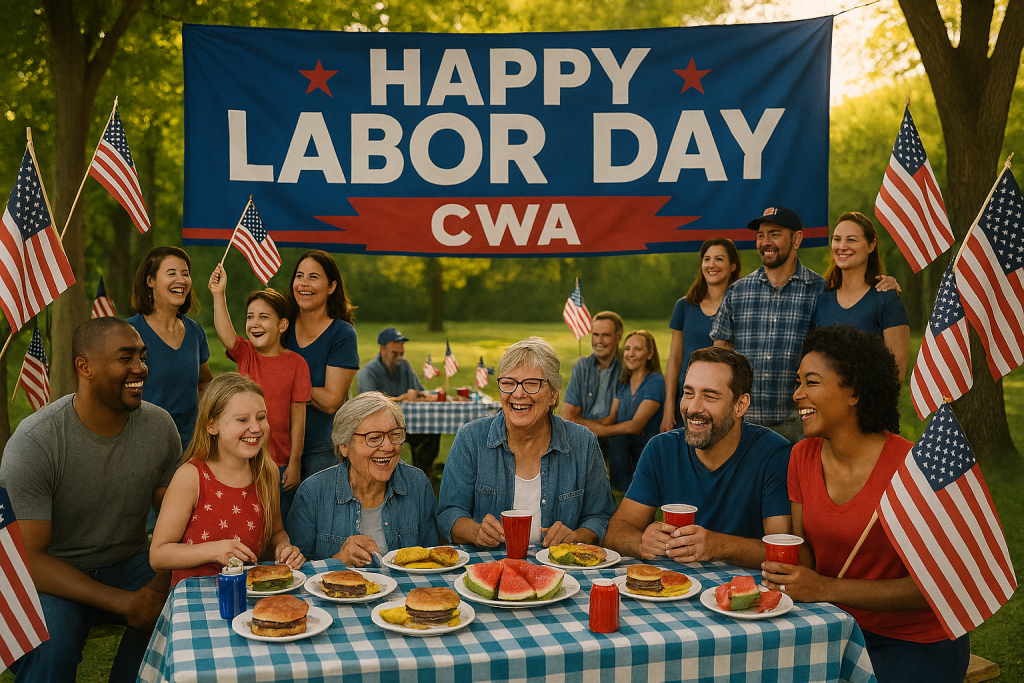
Happy Labor Day from CWA 9003